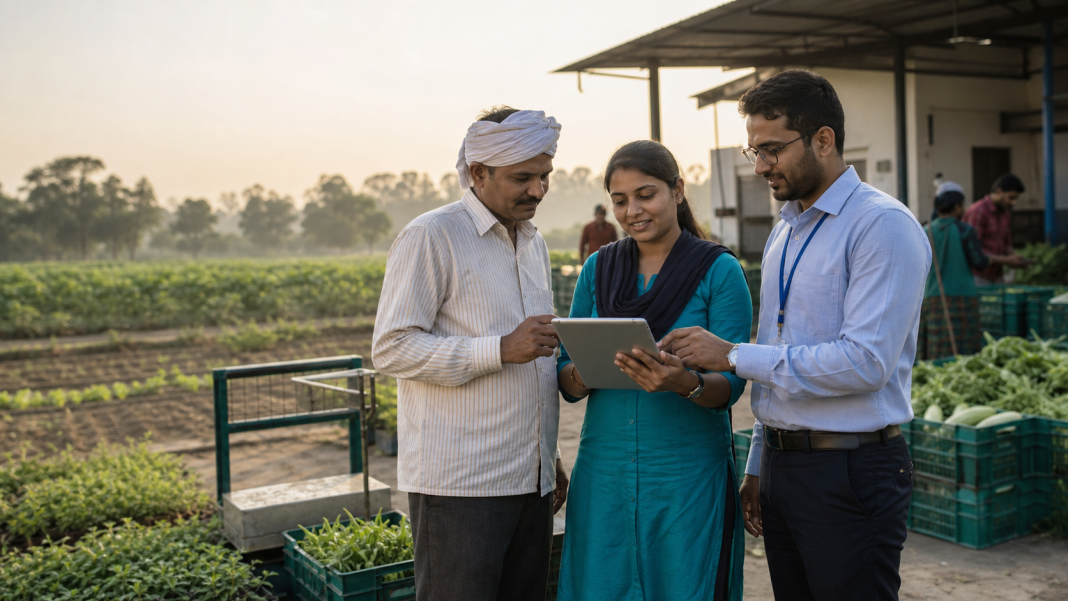

Agri fintech starts with a simple problem: a farmer may spend money months before harvest, yet most income arrives only after the crop is sold. A normal monthly loan does not fit that agricultural cycle.
However, agricultural production also faces risks that most firms do not. Rain may fail, prices may fall, or a pest may harm the crop. Financial records may be thin, and the nearest bank may be far away.
Agri fintech builds financial services around these facts. It links finance, agricultural data, local institutions, and digital systems. A loan form placed on a phone does not meet the need by itself.
What Agri FinTech Means
Agri fintech covers digital financial services for people and firms in agricultural value chains. Customers may include farmers, Farmer Producer Organizations (FPOs), buyers, agribusiness firms, input dealers, and rural households that rely on farm income.
In practice, three tests help define the field.
First, the customer earns money from farming or food trade, so cash flow may rise and fall with the crop season.
Second, the financial product fits that pattern. Repayment dates, payment plans, and risk assessments may follow the agricultural cycle.
Third, the service often works through institutional partners. Banks, FPOs, cooperatives, buyers, and development agencies may each play a role.
As a result, these tests also show how the field differs from its close neighbors.
Generic fintech serves many types of users and may offer payments, loans, savings, or investment tools across a wide range of industries. By contrast, agri fintech adapts those tools to agricultural cash flow and risk.
AgTech has a different starting point because it helps people grow, track, or sell crops. Drones, sensors, farm software, and crop advice are common examples. Still, an AgTech firm enters finance when it adds input credit, insurance, or payment services.
Rural fintech is broader than agricultural finance. It serves people who live outside large cities, even when their income has no link to farming. Thus, a loan for a village shop may be rural fintech, while a loan for seed or an input dealer’s stock may be agri fintech.
Five Gaps Agri FinTech Can Help Close
Agricultural borrowers often face five linked gaps. No application can remove them all, but thoughtful financial design can make each one easier to manage.
1. Collateral
Banks often ask for land, a standing crop, or stored goods as collateral. Yet tenant farmers may not hold a clear land title, while a farmer who needs pre-sowing finance has no crop to pledge.
New lenders can use other evidence. Sales records, buyer orders, input bills, and transaction history may show whether the agricultural enterprise can repay. As a result, the lender can assess both business cash flow and the land title.
2. Data quality
Many farmers have limited bank records and little past use of formal credit, so standard scores may tell a lender very little.
Digital systems can add new evidence from crop sales, input use, weather, warehouses, and FPO transactions. However, more data is not always better. It must be accurate, gathered with consent, and tied to a fair credit decision.
3. Efficient distribution
It costs a lot to find and serve one farmer at a time, and small loans may not cover that expense.
Institutional partners can help. An FPO, cooperative, buyer, or input network may already know the customer. Therefore, the finance firm can work through an organization that has trust and local reach.
4. Fair risk assessment
Agricultural risk changes by crop, region, season, weather, and market price. Therefore, one national score can miss important local facts.
A better model uses local data and transparent rules, then monitors the loan after funds are sent. Even so, human review remains important when the data is weak or the result looks unfair.
5. Trust
An affordable loan can still fail if the customer does not trust the firm. Hidden fees, harsh debt collection, weak support, and careless data practices can prevent adoption.
Clear terms matter, as do local help, accessible complaint systems, and support when a shock harms the crop. Trust forms part of the financial product.
Who Makes Farm Finance Work in India?
India has a wide network for farm finance. It includes large banks, regional rural banks, co-op banks, village credit groups, non-bank lenders, microfinance firms, FPOs, and the National Bank for Agriculture and Rural Development (NABARD).
Each group brings a different strength.
Banks have funds, rules, and the power to lend at scale. Rural banks and co-ops have local reach. FPOs know their members and may hold trade records. Tech firms can build new tools for risk checks, payments, and support.
NABARD helps fund and shape much of this system. It backs banks, rural groups, FPOs, and new farm firms. For example, its Agri-SURE fund has a ₹750 crore corpus, according to NABARD’s official Agri-SURE guide.
The Reserve Bank of India (RBI) also sets key rules. Its Priority Sector Lending Directions, 2025 include agriculture as a priority sector.
No single group can fix every gap. In practice, the best model may join a bank’s funds with an FPO’s reach and a tech firm’s tools. The resulting service must remain fair and financially viable.
Products, Platforms, and AI
Agri fintech includes a wide range of products. It can support:
- credit for seed, feed, and other inputs;
- cash for FPOs and small farm firms;
- digital payments and debt collection;
- invoice and supply chain finance;
- loans backed by goods in a warehouse;
- crop, weather, and livestock cover;
- savings and investment tools; and
- finance built into farm trade platforms.
The last model is often called embedded finance. It places a financial product inside a farm deal. For instance, a farmer may get credit while buying seed or receive payment support while selling a crop.
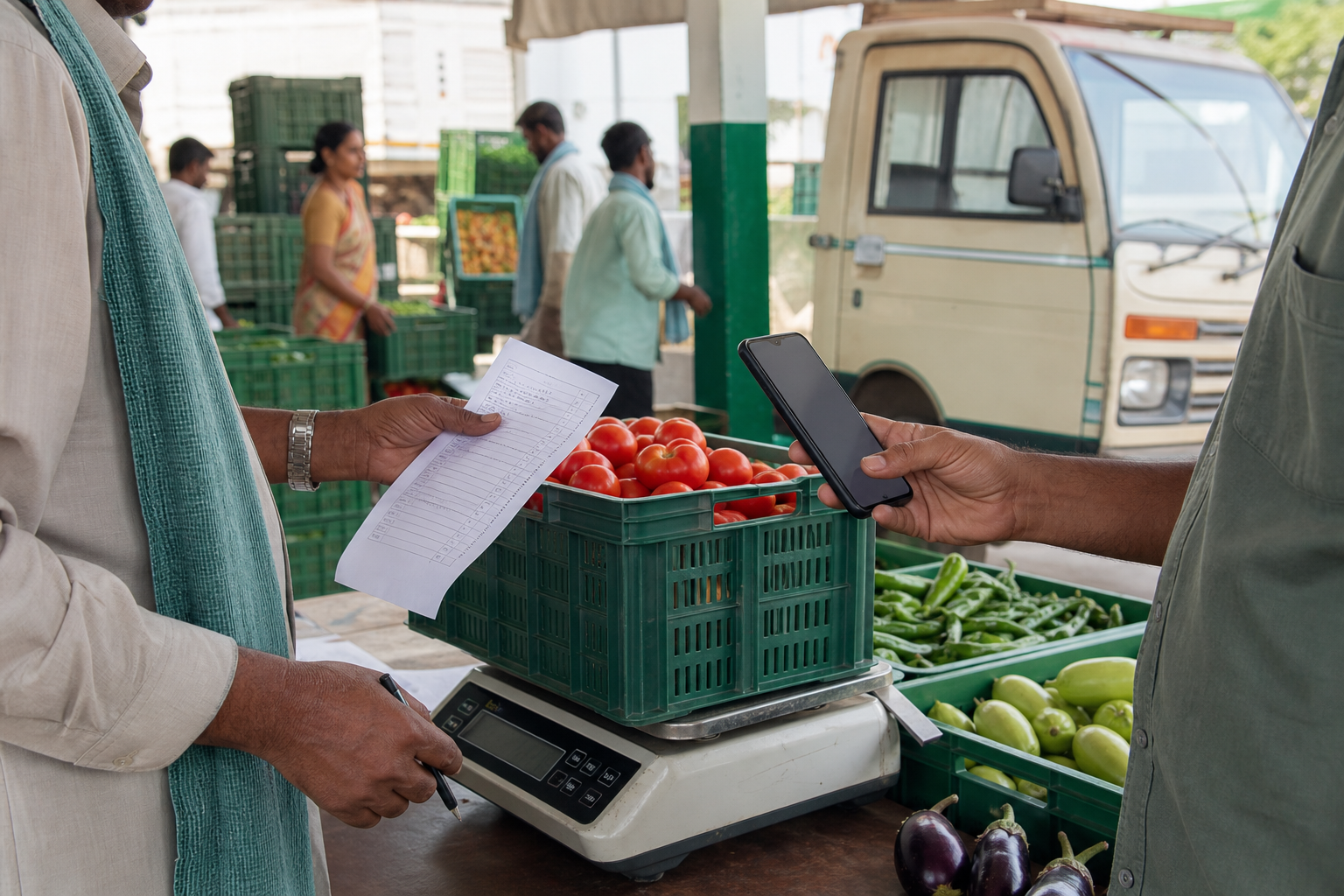
This model can cut the cost of reach. It can also link the loan to a real sale. However, the user must still see the full price and terms. A smooth app must not hide the debt.
Meanwhile, AI can help with some of this work. It can find patterns in crop, rain, sales, and payment data. It may also flag fraud, warn of stress, or guide a support team.
Yet AI can repeat gaps in the data. A tenant, a woman farmer, or a small producer may leave few digital traces. Thus, firms need consent, tests for bias, human review, and a clear way to appeal.
Readers can explore this wider theme through AgTech Central’s AI and AgTech coverage.
How to Judge an Agri FinTech Model
A strong model solves a real farm finance need across a full crop cycle. Digitizing old forms alone adds little value.
Use these five questions:
1. Does it use better proof for a loan, or does it still depend on the same old security? 2. Does it add useful farm data, and does the user agree to that use? 3. Can trusted partners reach users at a cost the firm can bear? 4. Do its risk checks reflect the crop, place, weather, and market? 5. Are pricing, debt collection, data use, and complaint procedures clear and fair?
These questions can reveal the gap between a sound service and a standard loan with a farm label.
Agri fintech can widen access to financial tools. Wider access creates value when the service also supports sound deals, fair terms, good data, and trust.
Explore AgTech Central’s growing Finance and FinTech section. The next article in this series will look at the five gaps in greater depth and show how firms can test their own model.
AGTECH BRIEFING · A FUTURECENTRAL BRIEFING
Get practical agriculture intelligence in your inbox.
Focused analysis for people building, financing, and managing agriculture and food systems.
Free to subscribe. Confirm your email after signing up. Unsubscribe at any time.

