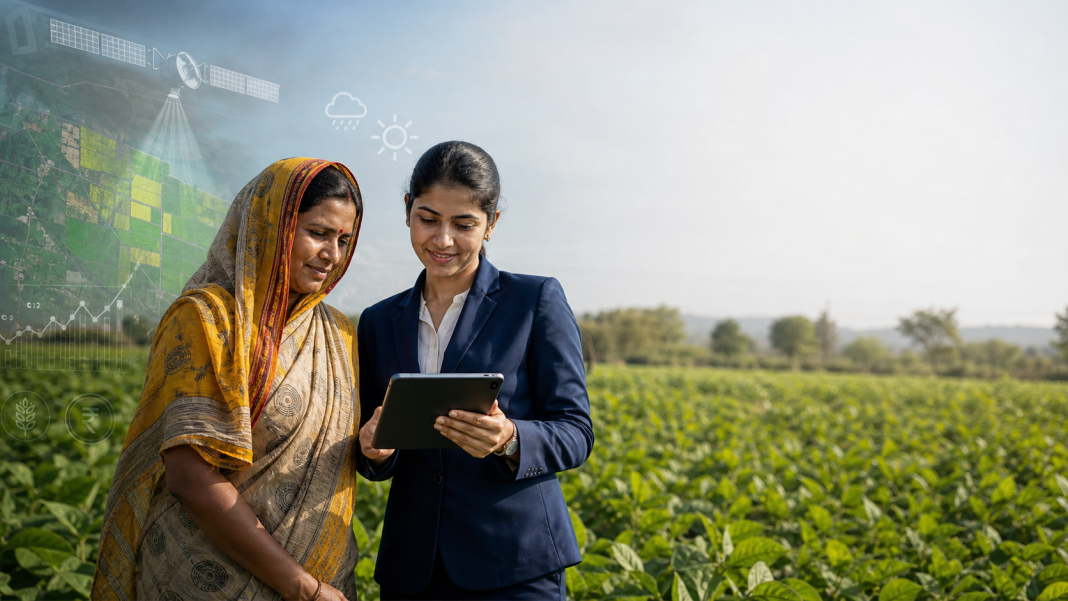

Digital farm lending can help a lender understand a farmer whose formal credit file says very little. For example, an account may stay quiet through months of farm work. Then one large payment arrives after harvest.
To a generic model, that pattern can look odd. Sales through a mandi, buyer or Farmer Producer Organization make it look even less like a monthly salary. Yet the farm may be viable, because agricultural context changes the reading.
That is where other data enters the loan process. With the farmer’s consent, a lender may check payment records, crop details, market receipts, satellite signals and past loan payments. The aim is to give the credit team a clearer view of each farm. This can support a fair and timely decision.
Why digital farm lending needs more than credit records
Most loan systems work best when income is regular and easy to prove, while farm cash flow follows a different pattern. A grower may spend for months before getting paid after harvest. Weather, crop choice and market prices affect when that money arrives. They also affect its value.
A credit bureau shows whether a person has repaid formal debt, yet it says nothing about the crop in the field today. Bank statements record money entering an account, but they may miss sales made through an aggregator or local buyer. Land records can link a person to a plot. Other proof is needed for current output and cash flow.
Digital lending tries to fill these gaps and show more of the farm business. However, the final question stays simple: does the loan fit the farm, and can the farmer afford it and repay it from real income?
This approach builds on the wider role of Agri FinTech in agricultural finance. It can also address several of the farm finance gaps that exclude viable borrowers.
The main data sources in digital farm lending
In digital farm lending, no single fact gives a sound credit answer. Instead, the lender must compare several signals. Do they tell the same story?
Payment and transaction trails
Bank activity, digital payments and buyer receipts help show the timing and strength of cash flow. India’s Account Aggregator system lets a customer share financial data with a regulated firm after giving consent. The Reserve Bank of India explains that the Account Aggregator does not see or store the data it transfers.
Useful signals may include crop sales, input purchases, past loan payments and regular receipts from known buyers. These records make more sense when the lender knows the farm calendar. A quiet account during the growing season may be normal, while a payment plan that ignores that cycle may fail.
Crop and satellite signals
Satellite images can help check a plot, its crop pattern and plant growth during the season. A lender may compare the stated crop with signs seen from space. The images may show drought, flood or crop stress early, giving the lender time to respond.
Satellite data offers useful proof, but clouds can block the view, while small plots, mixed crops and wrong plot lines can weaken the signal. The World Bank has documented how farm lenders use images, weather forecasts and remote sensors. It also asks who can use and control farmer data.
Market and buyer records
Mandi receipts, purchase records and FPO sales can show what a farmer sold. They also show the date and price. A long record with the same buyer can prove that the farm has steady trade. A bureau score may miss that fact.
The quality of these records varies. Therefore, a lender should separate checked sales from a farmer’s own estimates. One weak season should not prove that a farm is always risky. Crop prices and local weather can hurt a whole region at once.
Public agricultural data
Digital land files, mapped plot data and crop lists can speed up basic checks. As AgriStack grows, these records may become a key part of farm loan checks. Yet their reach and quality differ across states. If a record is missing or old, the lender should check the facts before deciding.
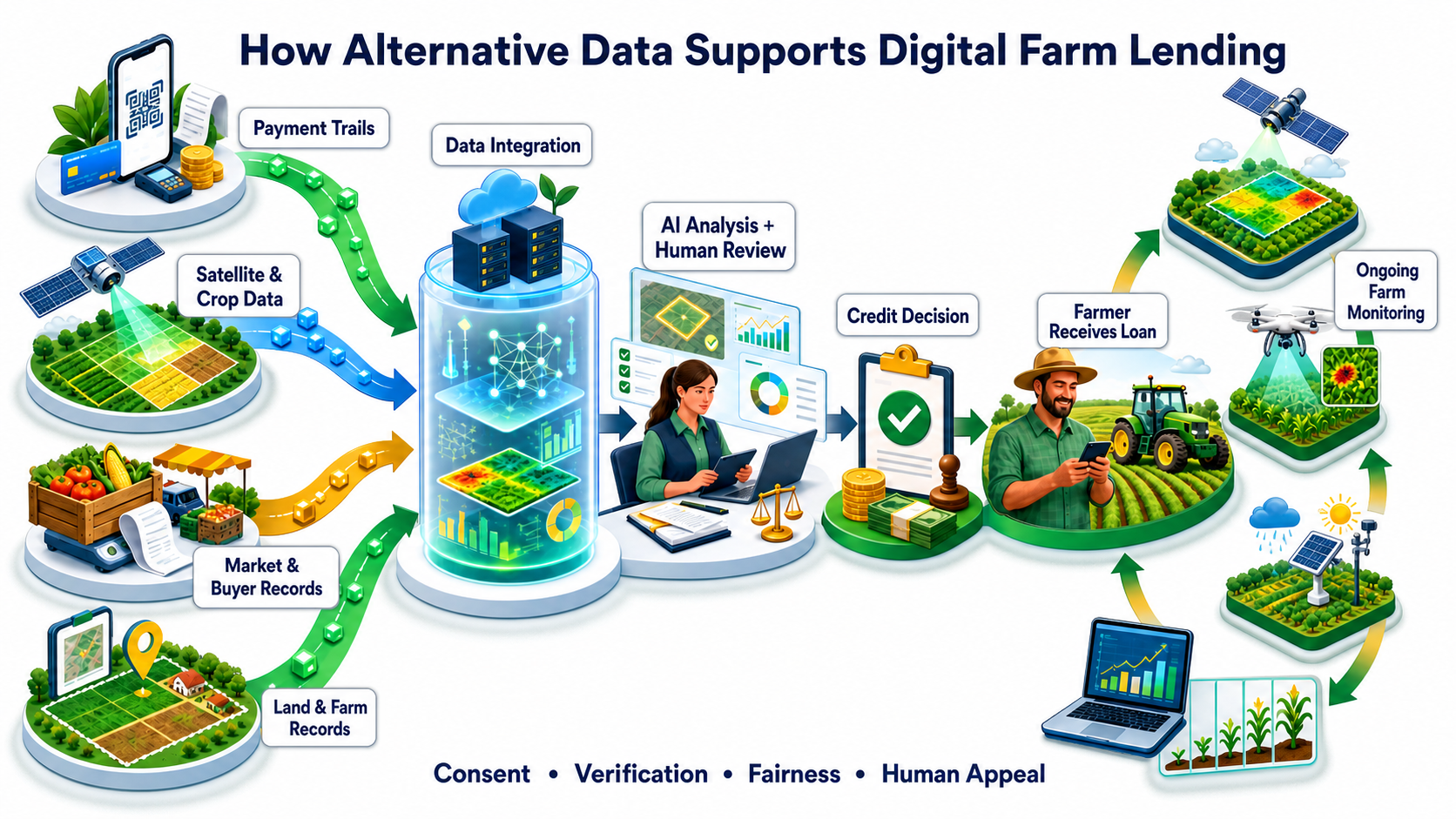
How digital farm lending turns data into a credit decision
First, the farmer gives permission to collect the required data. The lender then turns the raw records into useful signs. The checks may cover steady buyer payments and the match between the stated crop and mapped plot. Farm costs and past loan payments add further context.
A scoring model can compare those signs with past results. The lender then applies its rules for loan size, price and who can apply. A trained person should review odd cases or facts that clash. Checks continue after payout, helping the lender spot farm stress and flaws in the model.
This order matters. A smart model cannot fix bad source data. A high score also cannot excuse the wrong loan size or payment plan.
Where AI helps—and where it can go wrong
For digital farm lending, AI can find patterns in large sets of crop, payment and market data. It can help lenders tell a seasonal lull from a true warning sign. It may also help field staff find cases that need a closer look.
But an AI model learns from the data it receives. Past lending may have left out tenant farmers, women growers or places with weak digital links. The model may learn the same bias. Even simple facts such as location or phone type can harm a group by acting as a proxy.
Meanwhile, the climate and the market both change. A model trained in normal monsoon years may fail in a drought. A link between crop prices and loan risk may hold in one state but fail in another. Therefore, lenders must test models under stress, track results and update them often.
The safest rule is simple: AI should support the credit team. A model should not have the final say when no one can explain its result. Farmers also need a way to fix wrong data and ask for a review.
Five safeguards for responsible digital farm lending
Lenders, fintechs and FPOs should test a digital farm lending product against five practical safeguards:
- Clear consent: Tell the farmer what data is needed and why. State who will receive it and how long it will be kept.
- Limited collection: Gather only the facts that have a sound link to the loan decision.
- Source checks: Check plot, crop, sale and identity data before using a score.
- Fairness checks: Compare loan approvals, prices and missed payments across places and groups. Look for change after a weather or market shock.
- Human review: Give the farmer an appeal route when the data is missing or wrong. Do the same when the data gives a poor picture of the farm.
These steps do more than reduce legal risk. They improve the loan book. A lender that can explain a choice is more likely to find a weak assumption before it leads to a loss.
What farmers and FPOs should ask
Before sharing data or using digital farm lending, a farmer or FPO should ask:
- Which regulated institution is actually providing the loan?
- What is the annual percentage rate and total cost?
- Which data sources will influence approval or pricing?
- Can incorrect crop, land or transaction information be corrected?
- Who will handle complaints and repayment difficulties?
- Does the repayment schedule match the crop’s cash cycle?
Fast approval helps only when the loan itself fits. A loan approved in minutes can still cause harm when payments fall due before harvest or the fees are unclear.
Better visibility, not automatic certainty
Digital farm lending gives lenders a fuller view of a farm. Payment trails reveal cash flow, while market records show past trade and satellite signals add crop facts. Public data can also cut the cost of basic checks. When used with care, these sources can help farmers who remain unseen by old loan systems.
The same tools can create new barriers when data is poor or no one checks the model. A sound approach joins technology with consent, field skill and clear terms. It also gives each farmer a true right to human review. Other data should help a lender see the farm more clearly without making the farmer harder to hear.

