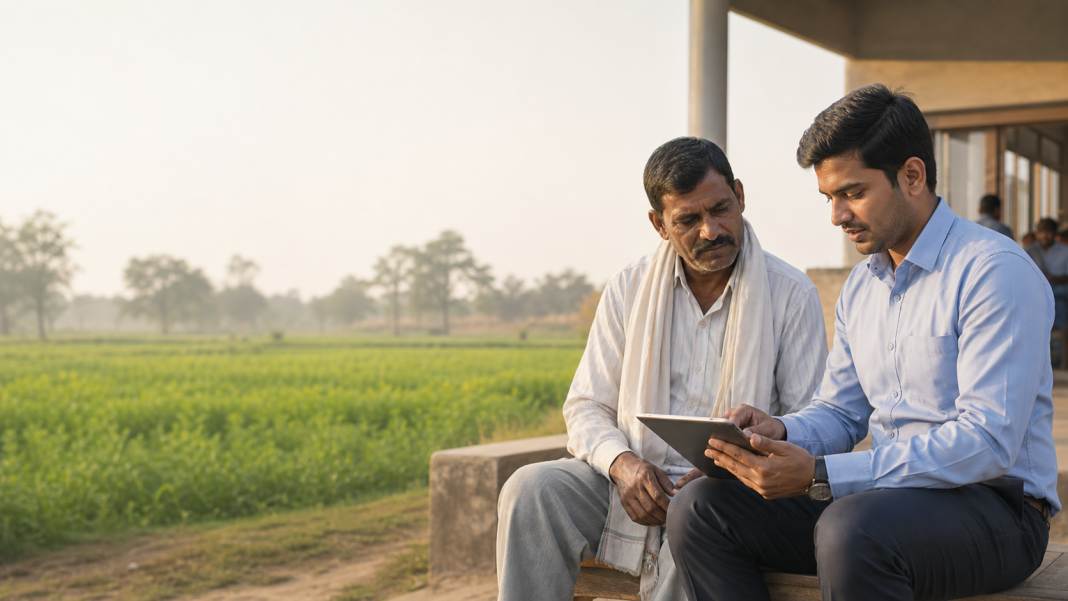

The Kisan Credit Card gives farmers a flexible way to borrow. A farmer can use it when agricultural expenses arise. The credit facility can then be paid after the crop earns cash.
That sounds simple. Yet the card sits inside a large agricultural credit system. Banks, rural banks, co-ops, state records, and public aid all shape how it works.
This guide explains the main steps in plain language. It also shows where the system works well and where gaps remain.
What Is a Kisan Credit Card?
The Kisan Credit Card, or KCC, is an agricultural credit line. India launched the scheme in 1998–99. Its goal was to give farmers quick access to crop funds.
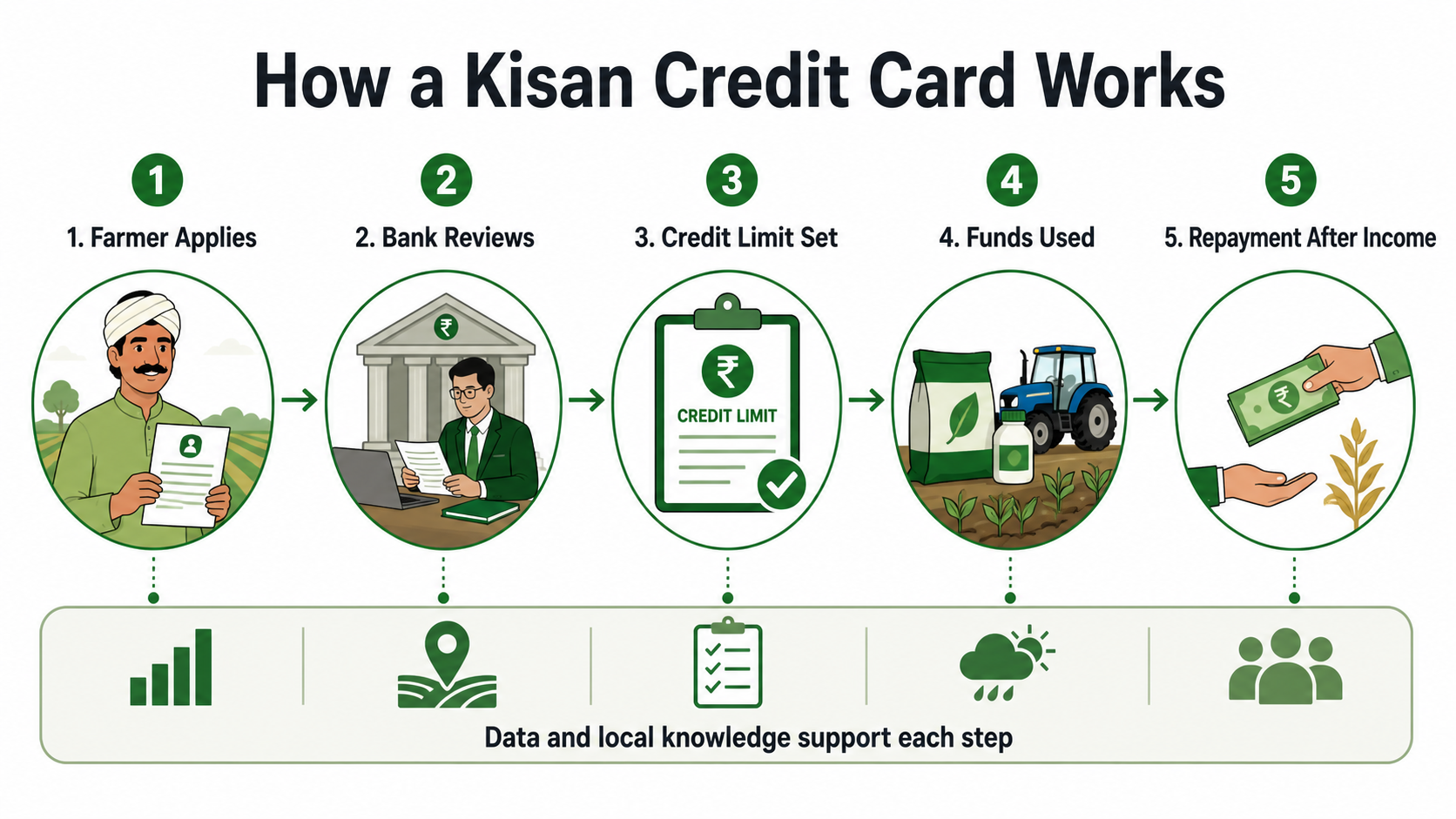
A KCC is different from a one-time credit facility. The financial institution first sets a credit limit. The farmer can draw from that limit as expenses arise. After harvest and sale, the farmer pays the credit facility back.
This plan fits agricultural cash flow. Most farms spend money for months before they earn it. A fixed monthly credit facility may work poorly in such a case.
For example, the card can cover seeds, feed, fuel, and other inputs. It may also cover some expenses after harvest. In some cases, it can fund dairy, fish, or other agricultural operations.
The Department of Financial Services counted 7.72 crore active KCC accounts in September 2024. Those accounts held about ₹9.99 lakh crore in loans. The scale is large, though access is still uneven.
Who Can Apply?
Farm owners can apply alone or with others. Yet the scheme also serves people who do not own land. Tenant farmers, sharecroppers, self-help groups, and joint liability groups may apply.
In real life, proof can be hard. A financial institution must know who farms the land and how the credit facility will be paid. Owners can point to land records, while tenants may need a lease, group proof, or other local records.
Many types of lenders can offer a KCC. These include large banks, regional rural banks, and rural co-op banks. Some digital Primary Agricultural Credit Societies, or PACS, can take part through a financial institution link.
Read more in AgTech Central’s Finance section. The Credit & Banking section will hold more guides on agricultural loans and lenders.
How Does a Financial Institution Set the Limit?
Therefore, the financial institution does not give each farmer the same sum. First, it looks at the crop and farm size. It also checks local input expenses and the usual cost per acre.
The financial institution may add funds for operations after harvest. It may also allow for home needs tied to the crop cycle. Repair expenses for agricultural tools may form part of the limit as well.
The limit can stay in place for several years. The financial institution reviews it from time to time. This saves the farmer from a full new credit facility request each season.
In December 2024, the Reserve Bank of India raised the general limit for agricultural loans without security. The limit went from ₹1.6 lakh to ₹2 lakh per borrower. The change took account of higher agricultural expenses.
However, security is only one part of the credit facility choice. The financial institution may also check past payments, crop risk, records, and the cost of serving the account.
What Interest Does a Farmer Pay?
Public support can cut the cost of some short-term KCC loans. This aid is called interest subvention. In plain terms, the state pays part of the credit facility cost.
The Department of Financial Services reported aid of 1.5% for lenders under the scheme rules. A farmer who paid on time could get more support. For some loans within the set limit, the final rate could fall to 4%.
Rules and limits can change with a new budget. Therefore, farmers should ask what rate applies, when payment is due, and what earns the lower rate.
The due date should fit the agricultural cycle. A dairy unit earns cash in a different way from a rain-fed crop farm. A good credit facility plan reflects that fact.
What Does the Kisan Credit Card Do Well?
First, the card gives the farmer a credit line that can be used again. There is less need for a fresh credit facility file before each crop.
Second, one limit can cover several agricultural needs. As a result, the farmer may rely less on costly informal debt.
The card can also work through many lenders. Large banks bring scale and strong systems. Rural co-ops bring local ties and knowledge. Regional rural banks add a clear rural focus.
Finally, the KCC gives the state one route for loan aid. This helps public programs reach many people through an existing system.
Why Do Credit Gaps Remain?
High account numbers do not mean that each farmer gets enough credit. Some tenants lack the proof a financial institution wants. Some farmers hold a card with a limit that falls short of real crop costs.
For instance, banks also face risk. Rain, heat, pests, and price falls can hurt farm income. A good farmer may still miss a due date after a bad season.
In addition, small farm loans cost money to serve. A bank must check the file, visit the farm, track the loan, and deal with late pay. That work can cost more in a remote area.
Farm debt waivers add more doubt. They can aid families in deep stress. However, a hope of future waivers may weaken pay habits. The lender may then grow less willing to give the next loan.
How Can Digital Tools Help the Kisan Credit Card?
As a result, digital tools can cut time and paper. An online form can speed up a request. A link to land and ID records can help the bank check facts. Bank data can also show if an account is in use.
NABARD and the Reserve Bank Innovation Hub have linked two loan systems. Their work aims to help co-op banks and rural banks process e-KCC loans. The Ministry of Cooperation is also moving PACS to a common digital system.
AI may help a bank spot risk or read cash flow. Still, poor data can harm a good borrower. Tenants and women farmers may have less data in their own names. Each system needs clear rules, human review, consent, and a way to appeal.
Digital speed cannot replace local knowledge. A field officer may know why a crop failed or why a sale was late. The best loan choice uses both data and sound human judgment.
A Five-Point KCC Check
Before signing, ask the lender about these five points:
- Who can apply? Ask what proof is valid for an owner, tenant, group, or sharecropper.
- What can it fund? Check which crops, farm work, and post-harvest costs are covered.
- How is the limit set? Ask which crop cost and farm size the bank used.
- What will it cost? Confirm the rate, fees, and reward for paying on time.
- When is payment due? Make sure the date fits the crop or farm income cycle.
These checks turn a card offer into a clear loan plan. They also help a farmer compare two lenders on fair terms.
The Next Step for Farm Credit
The Kisan Credit Card gives many farmers a steady route to working funds. The next task is to make each loan fit the farm that must pay it.
Fast service matters. So do clear terms, fair checks, and help after a real shock. Digital tools can aid this work, while local staff add the judgment that data may miss.
Next, read AgTech Central’s Digital Lending articles to learn how new data can shape farm loan decisions.
AGTECH BRIEFING · A FUTURECENTRAL BRIEFING
Get practical agriculture intelligence in your inbox.
Focused analysis for people building, financing, and managing agriculture and food systems.
Free to subscribe. Confirm your email after signing up. Unsubscribe at any time.

